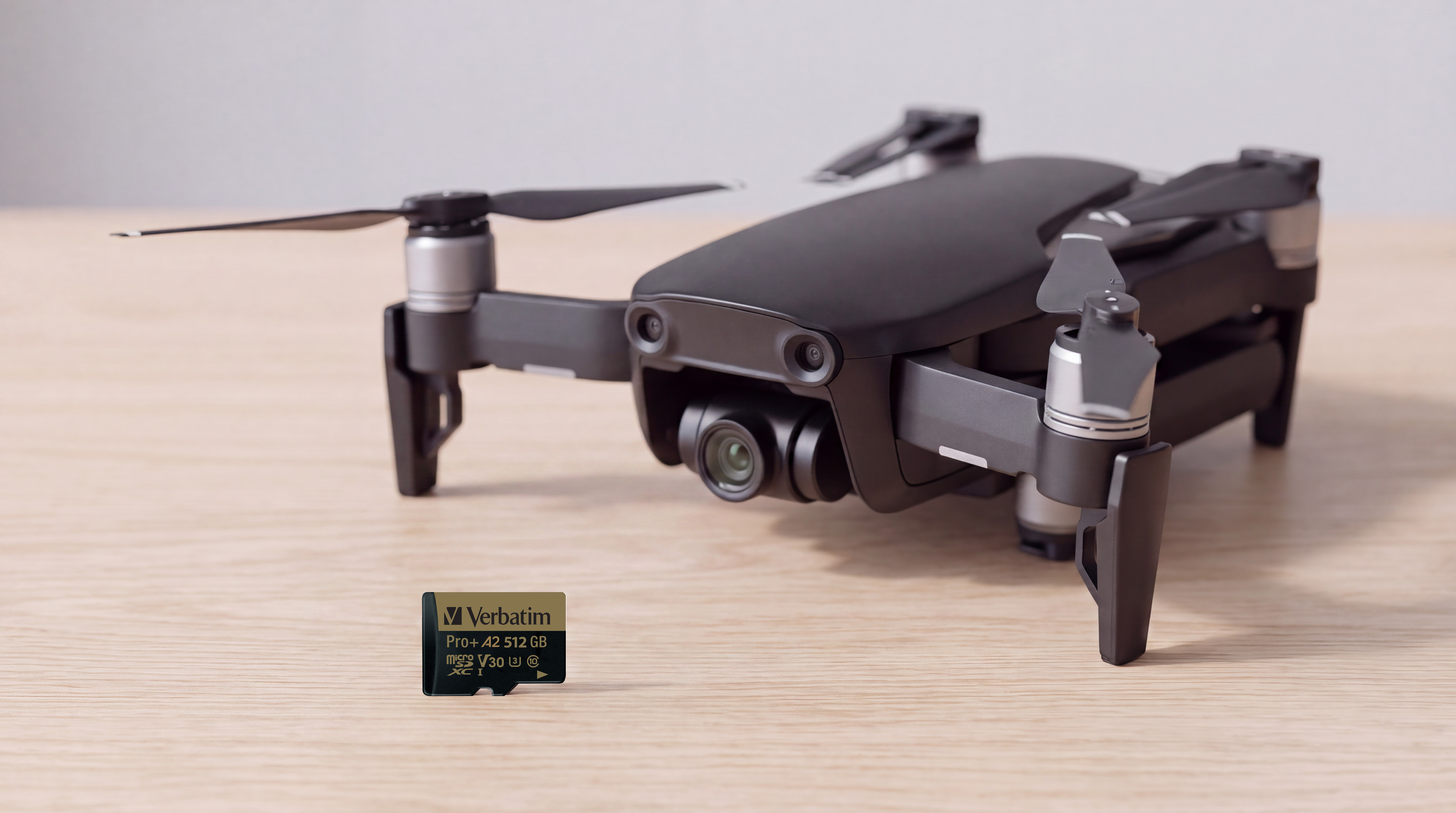
Not all memory cards are built for the same job
Buying Guide: Best Memory Cards for GoPro, Drones and Cameras
A dropped frame mid-shot, a drone that stops recording because the card couldn’t keep up, footage that stutters on playback – these are almost always a memory card problem, not a camera problem. Action cameras, drones and high-resolution cameras write data far faster than a phone does, and a card that isn’t rated to keep pace becomes the bottleneck.
Here’s how to actually read the speed ratings on your memory card, and which one fits your gear.
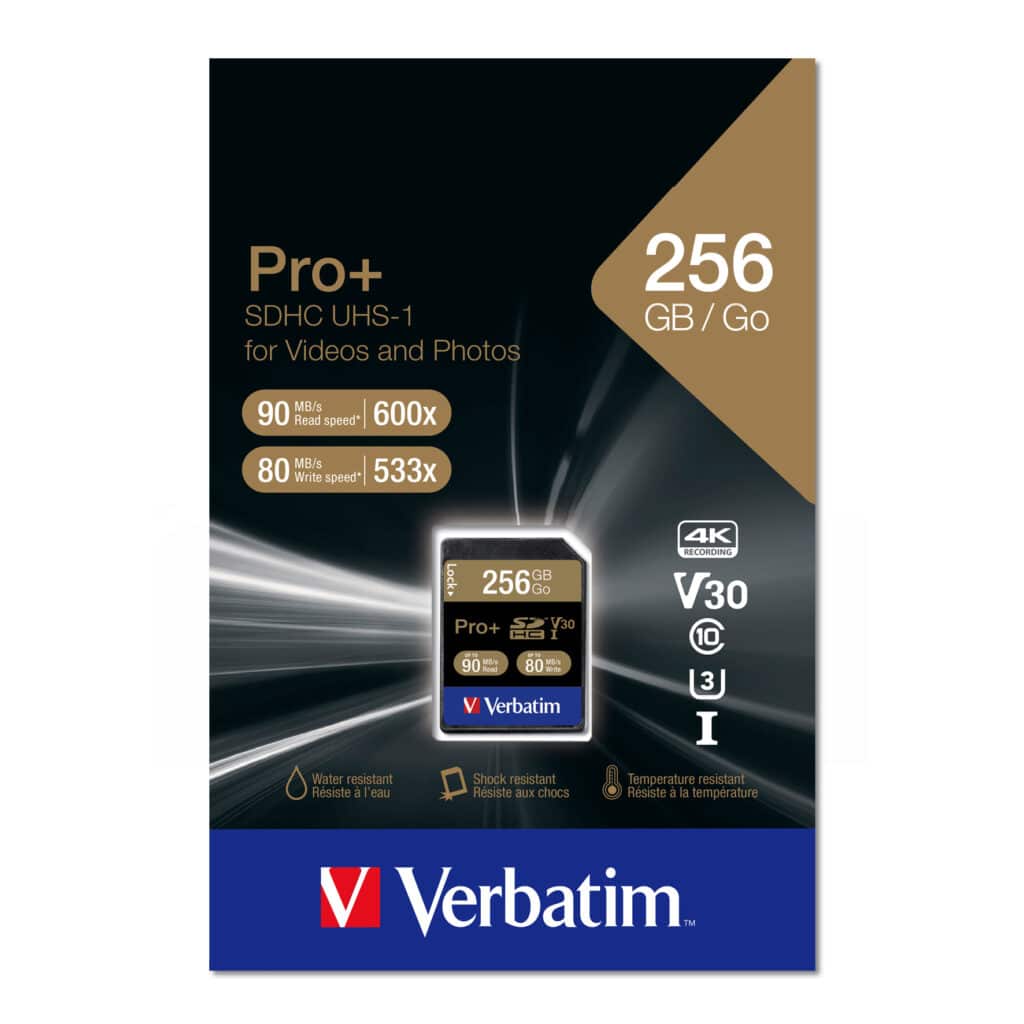
Make sense of the ratings on the packaging
Memory card packaging is covered in numbers and letters that mean very little at a glance. The two that actually matter for video:
- Video Speed Class (V rating): a V30 rating guarantees a minimum sustained write speed of 30MB/s, which is generally the baseline for smooth 4K recording. Lower ratings like V10 are fine for full HD but can struggle with sustained 4K.
- UHS Speed Class (U rating): U1 guarantees a minimum of 10MB/s sustained write speed; U3 guarantees a minimum of 30MB/s. Higher-end cards pair a U3 rating with a V30 rating for the same underlying guarantee.
Read & Write Speed
Read speed (how fast footage transfers off the card afterwards) and write speed (how fast the card can keep up with the camera while filming) are separate numbers – a card can have a fast read speed but a much slower write speed, which matters more for capture than editing.
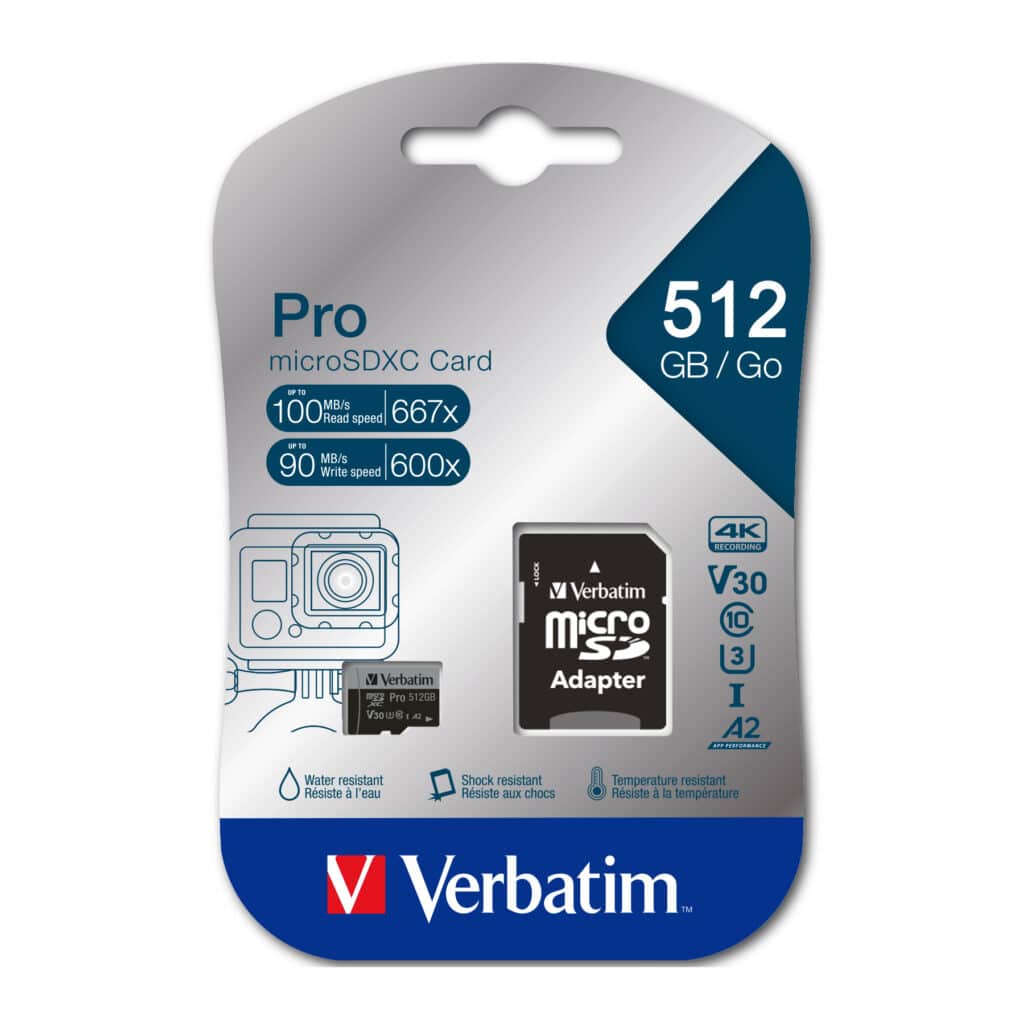
Comparing Verbatim’s ranges: SD vs microSD
It’s not just capacity and speed class that differ between ranges – the same tier can perform differently depending on whether you’re buying a full-size SD card or a microSD card, so it’s worth checking the format-specific spec rather than assuming they match.
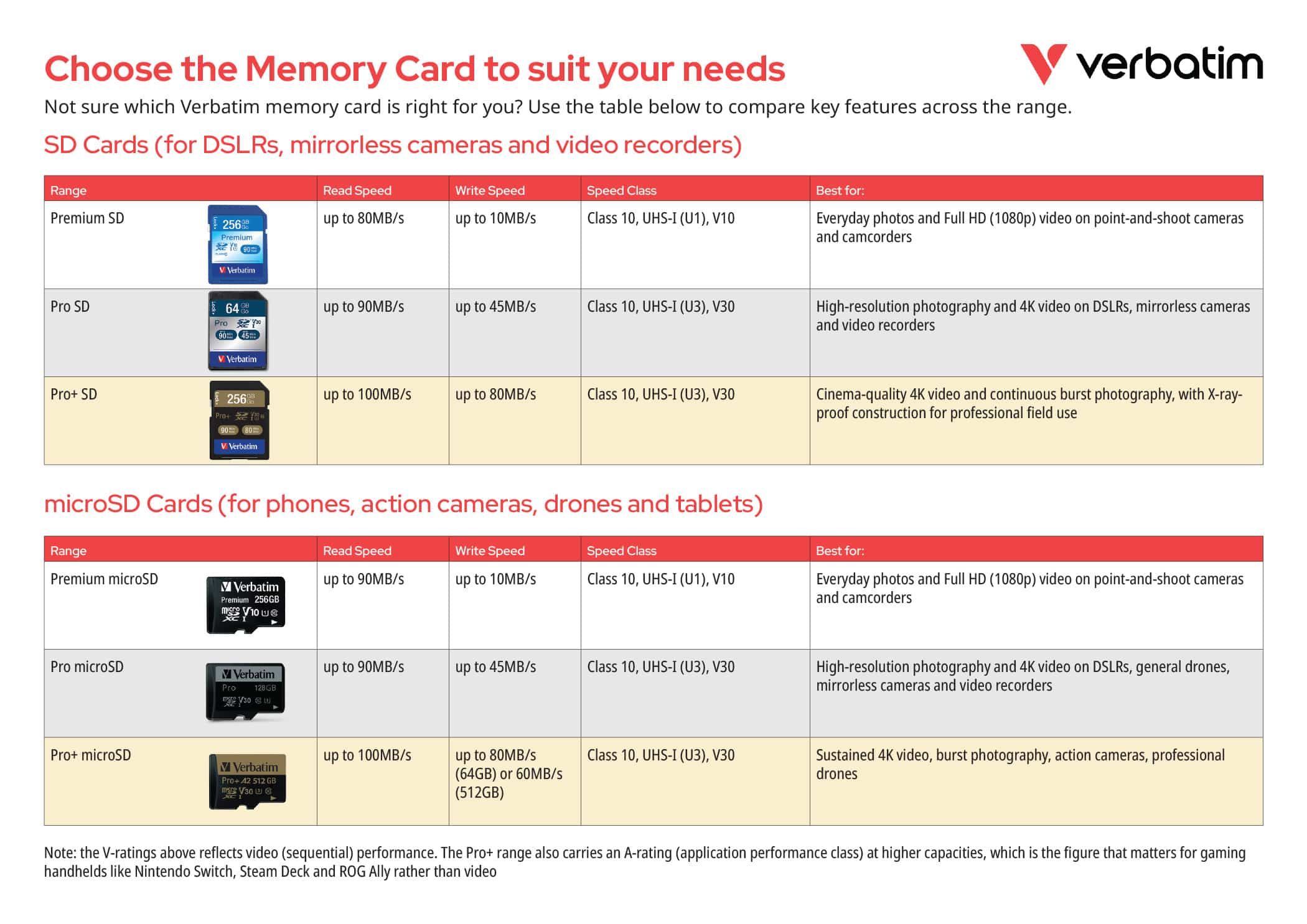
Worth noting: at the Pro tier specifically, the SD and microSD versions aren’t equivalent – the SD Card Pro carries a UHS-I U3/V30 rating suited to 4K, while the microSD Pro card is rated U1/V10, a step below. If you’re choosing between the two formats at the Pro tier for a 4K-capable device, that difference is worth factoring in.
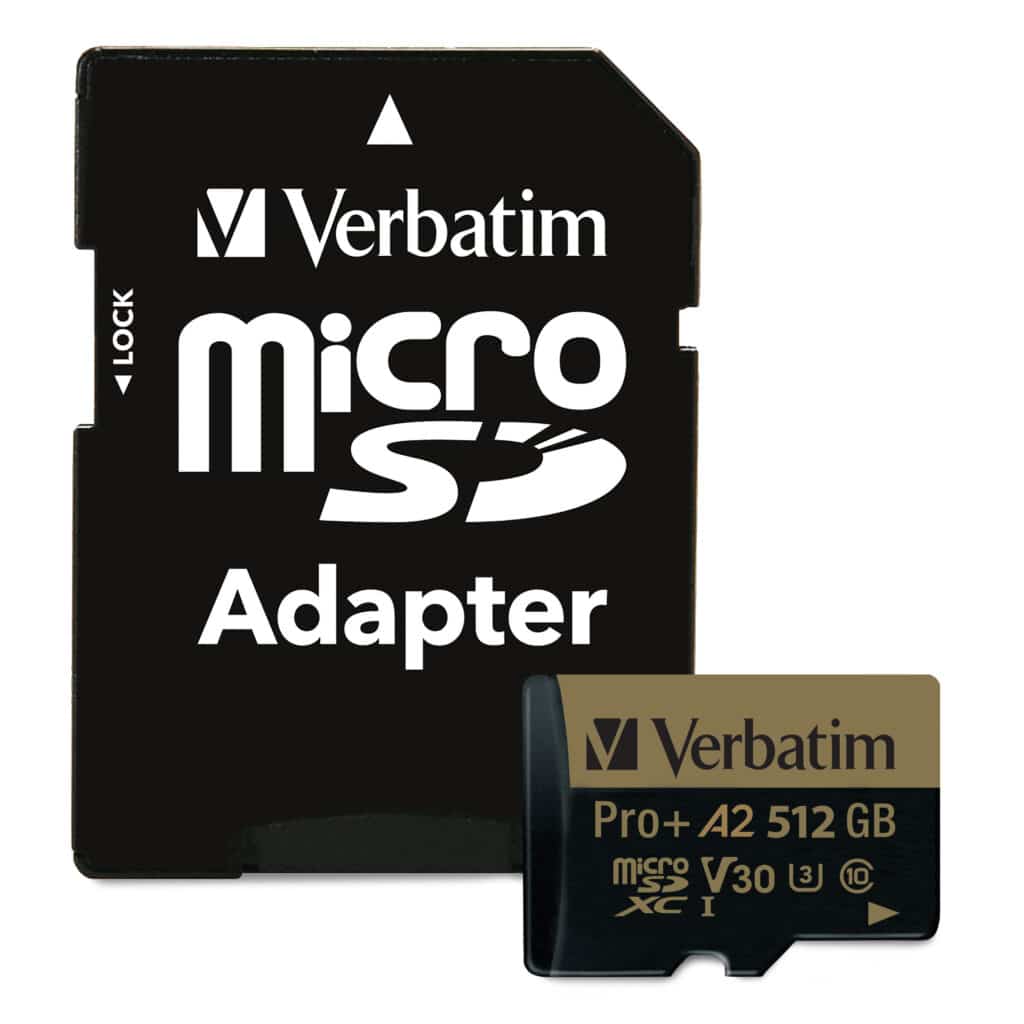
Verbatim’s Premium range covers the everyday end of the spectrum – reliable, water and shock-resistant storage for phones, tablets and basic point-and-shoot cameras, suited to 1080p video and everyday photos rather than demanding 4K capture. The Pro range steps up to 4K-capable use, with the SD version rated for it more comprehensively than its microSD counterpart. The Pro+ range is built for the most demanding capture – continuous 4K recording, high-speed burst photography, and action footage where a dropped frame actually matters, with the write speed to back it up, in both SD and microSD formats.
All ranges are built with water and shock-resistant construction, and microSD cards include an SD adaptor, so a card can move straight from a phone, drone or action camera into a laptop’s SD slot without a separate reader.
Matching the card to what you’re shooting
- GoPro or other action cameras filming standard 4K: These use microSD cards – the Pro+ range‘s V30 rating comfortably handles sustained 4K recording without dropped frames, and its shock and water resistance suit the environments action cameras end up in.
- Drones: Also microSD format – both the Pro and Pro+ ranges list drones as a suited use case, though Pro+ is the safer choice if you’re shooting 4K footage continuously during flight, where a write speed dip could mean lost frames mid-flight.
- DSLRs, mirrorless cameras or dedicated video recorders: These take full-size SD cards – the SD Card Pro or Pro+ range covers high-resolution photography and 4K video, with Pro+ adding X-ray-proof construction for professional field use.
- High-speed burst photography: The Pro+ range’s higher sustained write speed handles rapid burst shooting better than the standard Pro range, in either format.
- Everyday use in a phone, tablet or basic camera: The Pro range is more than sufficient and a more budget-friendly option if you’re not shooting demanding continuous 4K or burst content.
- Handheld gaming devices (Nintendo Switch, Steam Deck, ROG Ally): These care about random read/write speed – the A-rating – more than the V-rating that matters for video, since it determines how quickly a game’s textures, shaders and save data load. The Pro+ range‘s A2 rating at 128GB and up (A3 at 256GB) is built for exactly this.
- Expanding a phone or tablet’s storage, or shooting everyday 1080p video: The Premium range covers this comfortably and is the most budget-friendly option in the lineup, without the 4K-specific speed guarantees of the Pro and Pro+ ranges.

A quick note on capacity
Match capacity to how long you’ll be away from a laptop to offload footage, not just total trip length – 4K video consumes storage quickly, particularly at higher frame rates. Higher capacities in the Pro+ range also unlock higher application performance ratings (A2 at 128GB and 512GB, A3 at 256GB), which matters if the card’s also being used to run apps rather than just store footage.
A V30-rated card, like Verbatim’s Pro+ range, guarantees a minimum 30MB/s sustained write speed, which comfortably supports 4K recording without dropped frames.
The Premium range offers up to 90MB/s read and 10MB/s write speeds (Class 10, U1), suited to everyday photos and 1080p video. The Pro range offers the same speed figures but with a V10 video speed class rating for 4K-capable use. The Pro+ range offers up to 100MB/s read and 80MB/s write speeds (V30, U3), suited to sustained 4K video and burst photography.
The Premium range is built around Full HD (1080p) recording rather than 4K, so for sustained 4K capture the Pro or Pro+ ranges are the better fit.
Not always. At the Pro tier specifically, the SD Card Pro carries a UHS-I U3/V30 rating suited to 4K, while the microSD Pro card is rated U1/V10, a step below – worth checking the specific format’s spec rather than assuming they match.
DSLRs, mirrorless cameras and dedicated video recorders generally take full-size SD cards, while phones, action cameras and drones generally take microSD cards. Check your specific device’s card slot if you’re unsure.
Look for the A-rating (A1 or A2) rather than the V-rating. A2 guarantees faster random read/write performance, which is what determines how quickly a game’s textures, shaders and save data actually load. Verbatim’s Pro+ range carries an A2 rating at 128GB and up.
Not directly – write speed is what determines whether a card can keep up with a camera while filming. Read speed matters afterwards, when transferring footage off the card.
UHS (Ultra High Speed) class indicates a guaranteed minimum sustained write speed. U1 guarantees at least 10MB/s, while U3 guarantees at least 30MB/s.