
What is outdated tech actually costing your business?
Most Australian businesses know they should upgrade their tech. Most put it off. Not because the need isn’t there, but because the timing never feels quite right. EOFY has a way of changing that. But rather than framing this as a conversation about what you can claim before 30 June, we want to reframe it entirely: what is your current setup actually costing your business, every single day?
The productivity tax nobody talks about
There’s a line item missing from most business P&Ls. It doesn’t appear on any invoice. It won’t show up in your operating expenses. But it’s real, and it compounds…. Research puts the average at 21 minutes of lost productivity per professional per day, attributable directly to tech friction. But what does that actually look like?
Tech friction is the accumulated drag of small, repeated inefficiencies: waiting for a slow file transfer to finish before you can move on. Hunting for the right adapter before a meeting. A laptop that takes twice as long to charge as it should. Toggling between windows on a single screen when the task calls for two. Individually, each of these feels minor. Collectively, they represent a constant, invisible tax on your team’s time and focus.
Across 230 working days, 21 minutes per person adds up to 80 hours – per employee, per year. At median Australian professional salaries, that’s thousands of dollars in payroll producing no output, no progress. Just waiting for technology to catch up. For a team of ten, that number becomes a budget conversation. For larger organisations, it’s a material cost hiding in plain sight.

The case for a second screen
Of all the productivity interventions available to knowledge workers, additional screen real estate has one of the strongest evidence bases. A study by Jon Peddie Research found that dual-monitor setups increase productivity by an average of 42%.
The historic barrier has been portability. A second screen at a fixed desk is straightforward. A second screen for a team that works across offices, client sites, and home setups is a different problem.
Verbatim’s Portable Monitor range was built to solve exactly that. Each monitor connects via a single USB-C cable, weighs under a kilogram, and fits in a standard laptop bag. A two-screen workstation, set up in under 60 seconds, anywhere your team works.
Starting from just $209 RRP, the range includes different screen size and touchscreen options. At that price point, the productivity case pays for itself quickly.
The charger problem most businesses haven’t noticed
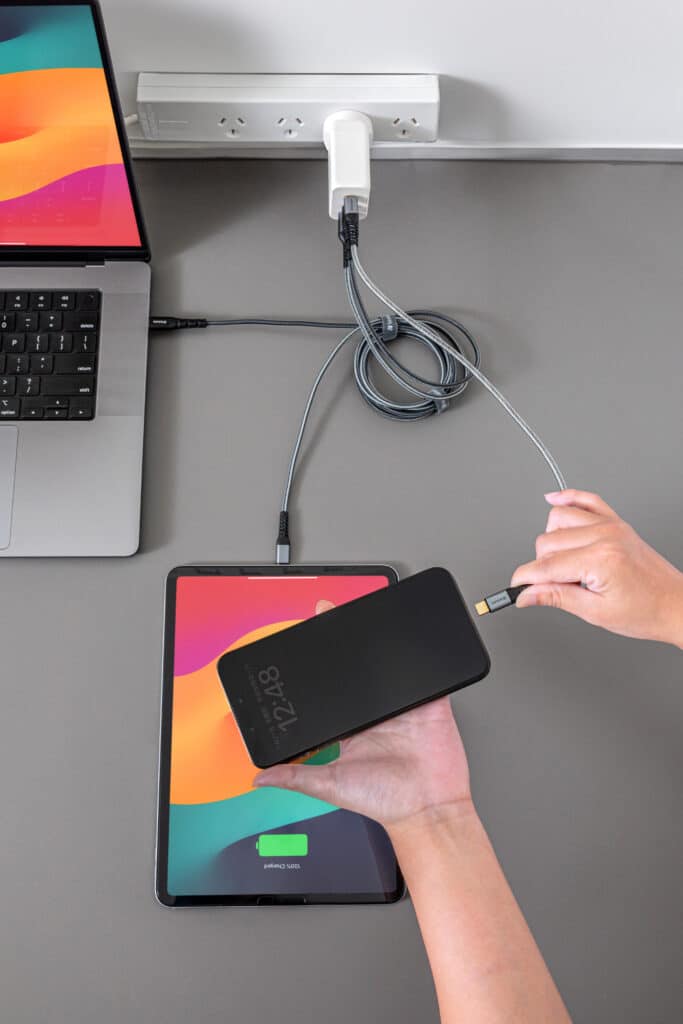
GaN (Gallium Nitride) charging technology has been commercially available for five years. It delivers faster charging speeds in a significantly smaller form factor than conventional chargers. And yet most business devices are still paired with chargers that predate it or that were simply never specified to match device requirements.
Here’s why that matters: a laptop rated for 100W charging, connected to a 45W charger, charges at less than half its potential speed. For a professional working through a long day or a back-to-back travel schedule, that gap is felt and it’s a textbook example of tech friction that’s easy to eliminate.
Verbatim’s GaN charger range delivers full-rated output in a package up to 40% smaller than conventional alternatives. Starting from $59.95, it’s one of the lowest-cost, highest-impact upgrades available to a business fleet.
Storage: where time quietly disappears & data risk hides
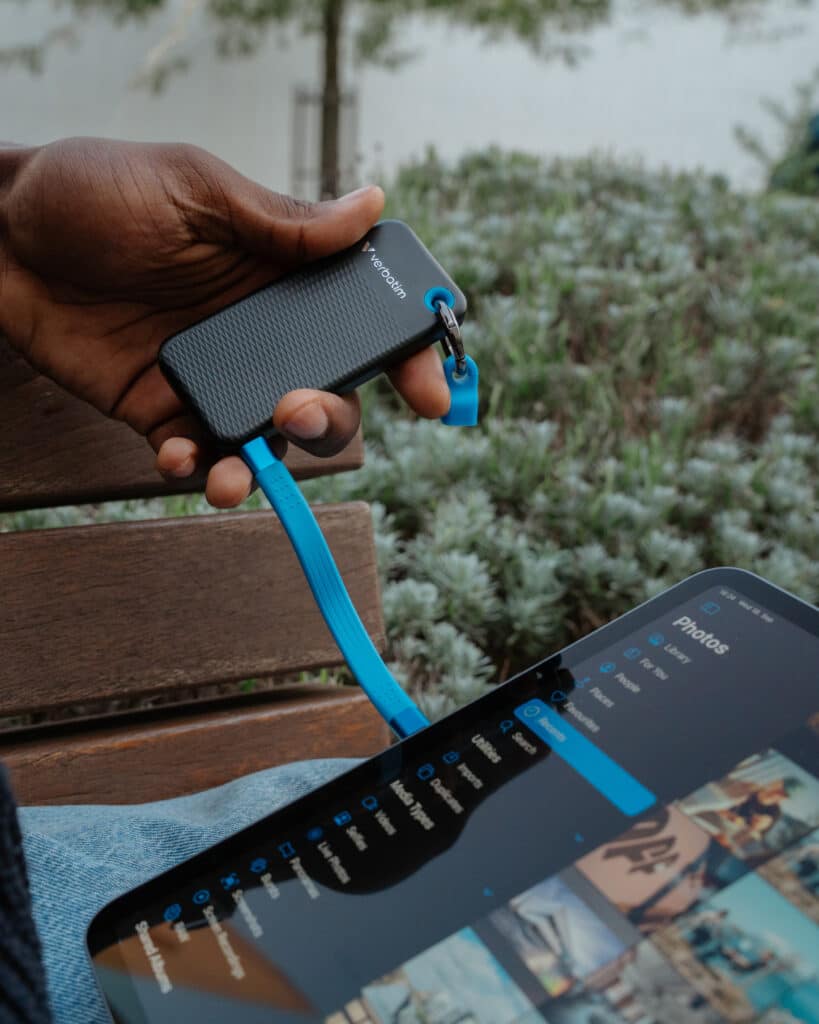
A conventional hard drive transfers data at around 80–120MB per second. A quality SSD transfers at 500MB per second or faster. For a professional regularly working with large files – creative assets, project archives, video, large datasets – that’s the difference between a 90-second transfer and a 7-minute one. Every time. Across a year and a team, it adds up to hours of recovered time.
But speed isn’t the only reason to consider an upgrade. Every Verbatim external SSD also includes 3-2-1 Eternity Backup – automated backup software, included free with every drive.
The software supports scheduled backups – continuous, daily, weekly, or monthly – and can back up across multiple destinations simultaneously, including external drives and optical media.
For businesses that don’t have a formalised backup process, it’s a meaningful safeguard included at no extra cost.
Eliminating connection friction
Every cable hunt before a meeting. Every moment spent choosing between charging a device and connecting to a display. Every adapter that almost fits. These are small frictions, but they’re constant, and they add up.
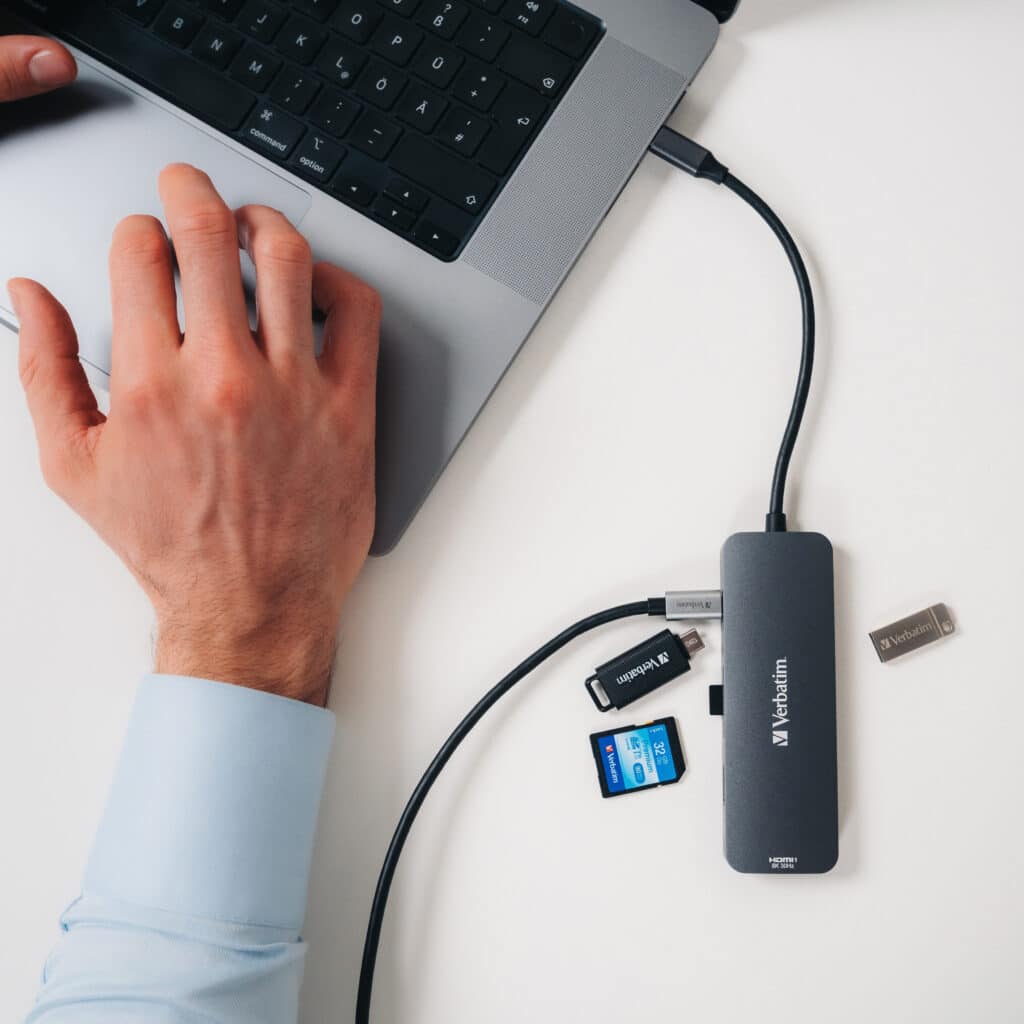
Verbatim’s USB-C Pro Multiport Hubs deliver u to 14 ports through a single USB-C connection: HDMI, USB-A, USB-C, SD card, ethernet – all simultaneously. One purchase that removes an entire category of daily friction for anyone who presents, travels, or moves between workspaces.
A note on EOFY and tax
This article isn’t tax advice… what’s deductible depends on your specific business structure and your accountant’s assessment. What we can say is that technology used for income-producing purposes is exactly the kind of investment Australian businesses discuss with their accountants at this time of year.
If a refresh has been on the agenda, before 30 June is the right moment to act on it, both from a tax planning perspective and because the productivity gains start from day one.