
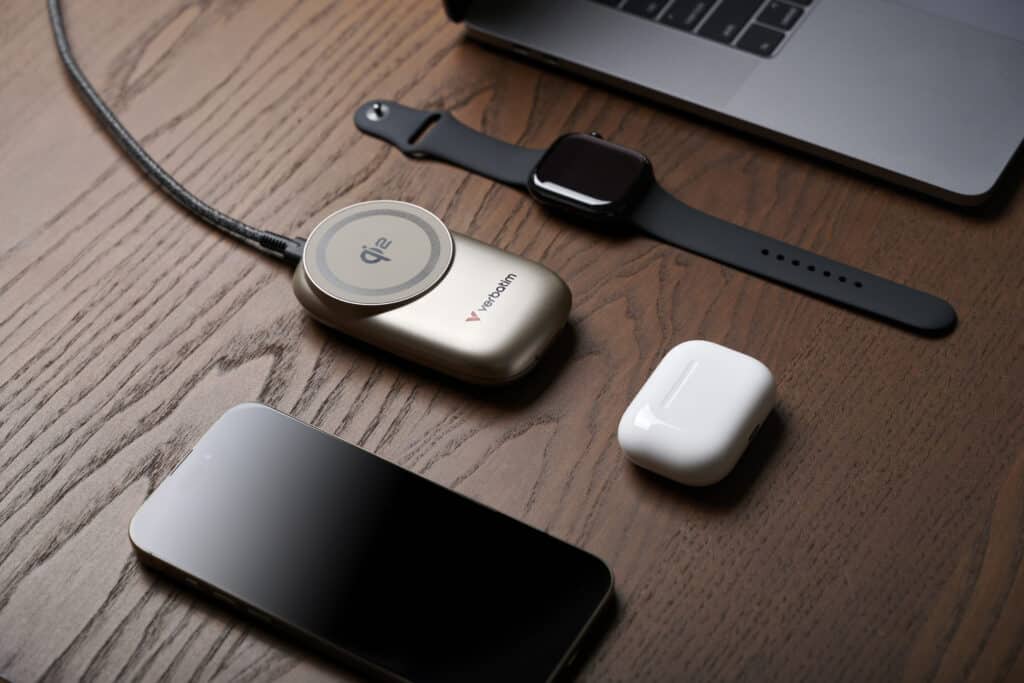
Charging, without the cord chaos.
MagSafe vs Qi2: What’s the Difference, and Which One Do You Actually Need?
If you’ve shopped for a wireless charger recently, you’ve probably wondered about MagSafe vs Qi2 – the two terms get thrown around like they’re interchangeable. They’re related, but they’re not quite the same thing – and knowing the difference will save you money and guesswork the next time you’re choosing a wireless charger, power bank, or car mount.
Here’s the short version: MagSafe is Apple’s proprietary magnetic charging system. Qi2 is the open industry standard that adopted MagSafe’s magnet layout and made it available to every phone brand, and it’s also the direct successor to the original Qi standard most wireless chargers have used for over a decade. In practice, that means most new “MagSafe-style” chargers on the market today, Verbatim’s included, are actually Qi2 chargers, which is good news if you’re not on an iPhone.
Let’s break down what that actually means for your next charger.

What is MagSafe?
MagSafe launched with the iPhone 12 in 2020. It combines two things in one accessory:
- A ring of magnets inside the phone that snap perfectly onto a matching magnetic charging pad, so the coils line up every time – no more fumbling around trying to find the sweet spot on a wireless charging pad.
- Faster wireless charging, originally up to 15W, compared to the 7.5W most iPhones were capped at on standard Qi chargers.
The catch: MagSafe was Apple’s own technology, built into iPhone 12 and later. Android phones couldn’t use it, and accessory makers had to license Apple’s magnet specification to build “MagSafe compatible” gear.
What is Qi2?
Qi2 is the next generation of the Qi wireless charging standard, released in 2023 by the Wireless Power Consortium – the same industry body behind the original Qi charging most phones already used. The headline feature of Qi2 is something called Magnetic Power Profile (MPP), which is essentially the MagSafe magnet ring, standardised and opened up for any manufacturer to build into any phone.
In other words, Apple contributed its magnet design to the Qi2 standard. That means:
Any phone without built-in Qi2 magnets can usually still charge on a Qi2 pad, just without the magnetic snap – it’ll fall back to standard Qi speeds instead.
Qi2 chargers snap onto iPhone 12 and later the same way MagSafe ones do, because they use the same magnet ring.
Qi2-certified Android phones (a growing list, including recent Samsung, Google and other flagship models) get the same snap-to-align magnetic charging and up to 15W speeds – something they never had with MagSafe.
MagSafe vs Qi2: The Key Differences
| MagSafe | Qi2 | |
| Made by | Apple (proprietary) | Wireless Power Consortium (open standard) |
| Device Support | iPhone 12 and later only | iPhone 12+ and Qi2-certified Android phones |
| Max. Speed | Up to 15W (Apple devices) | Up to 15W (any certified device) |
| Magnetic Alignment | Yes | Yes – same magnet layout as MagSafe |
| Accessory Compatibility | Apple-licensed accessories | Any Qi2-certified charger, from any brand |
| Future Direction | Apple’s own ecosystem | Becoming the universal standard across brands |
The practical upshot: a well-made Qi2 charger does everything a MagSafe charger does, plus it works with a wider (and growing) range of phones. That’s why most accessory brands, Verbatim included, have shifted their new charging hardware to Qi2 certification rather than building separately for MagSafe alone.
What About Qi vs Qi2?
It’s worth pausing on this one, because “Qi” chargers have been around since 2010 and are still the most common type on shelves, so it’s easy to assume Qi and Qi2 are basically the same thing with a different label. They’re not.
Qi is the original wireless charging standard: place your phone on a pad, and power transfers through the coils via induction. It works, but alignment is finicky – shift the phone a few millimetres off-centre and charging slows down or stops. Speeds on Qi are also inconsistent between devices, since manufacturers implemented their own power profiles (Apple iPhones capped at 7.5W on generic Qi pads, for example, while some Android phones supported faster proprietary fast-charging that only worked with their own-brand pads).
Qi2 fixes both of those problems. It adds the magnetic alignment ring (Magnetic Power Profile) so the coils always sit exactly where they need to, and it standardises fast charging at up to 15W across any certified device and any certified charger – no more guessing whether a specific phone-and-pad combination will hit full speed.
| Qi | Qi2 | |
| Released | 2010 | 2023 |
| Alignment | Manual – no magnets, prone to drift | Magnetic – snaps into place automatically |
| Charging Speed | Varies by device/brand, often 5–7.5W | Standardised up to 15W on certified devices |
| Consistency | Inconsistent across phone brands | Uniform performance across all certified devices |
| Backward Compatible? | N/A | Yes – Qi2 chargers still charge older Qi-only phones, just without the magnetic snap or 15W speed |
The short version: Qi2 isn’t a rebrand of Qi, it’s a genuine upgrade – same underlying wireless charging technology, but with Apple’s magnet alignment built in and charging speeds standardised across brands. A Qi2 charger will still work with an older Qi-only phone, so upgrading your charger doesn’t lock out older devices, it just doesn’t unlock the magnetic snap or top speed until your phone supports Qi2 too.
So Which Should You Buy?
- iPhone 12 or later: Either works, but a Qi2 charger is the safer long-term buy – it’s built to the current industry standard and will keep working as Qi2 keeps evolving.
- Recent Android flagship with magnetic charging support: Go Qi2. It’s the only standard that gives you the magnetic snap and fast charging on Android.
- Mixed households or shared devices (iPhone plus Android, or you’re not sure what you’ll be using in two years): Qi2 is the more future-proof, universal choice.
- Older phone with no magnetic charging support at all: Any Qi2 charger will still charge it wirelessly – you just won’t get the magnetic snap-on alignment.
Where This Shows Up in Verbatim’s Range
Verbatim’s newer charging accessories are built around Qi2, so you get MagSafe-style snap alignment with broader device compatibility baked in:
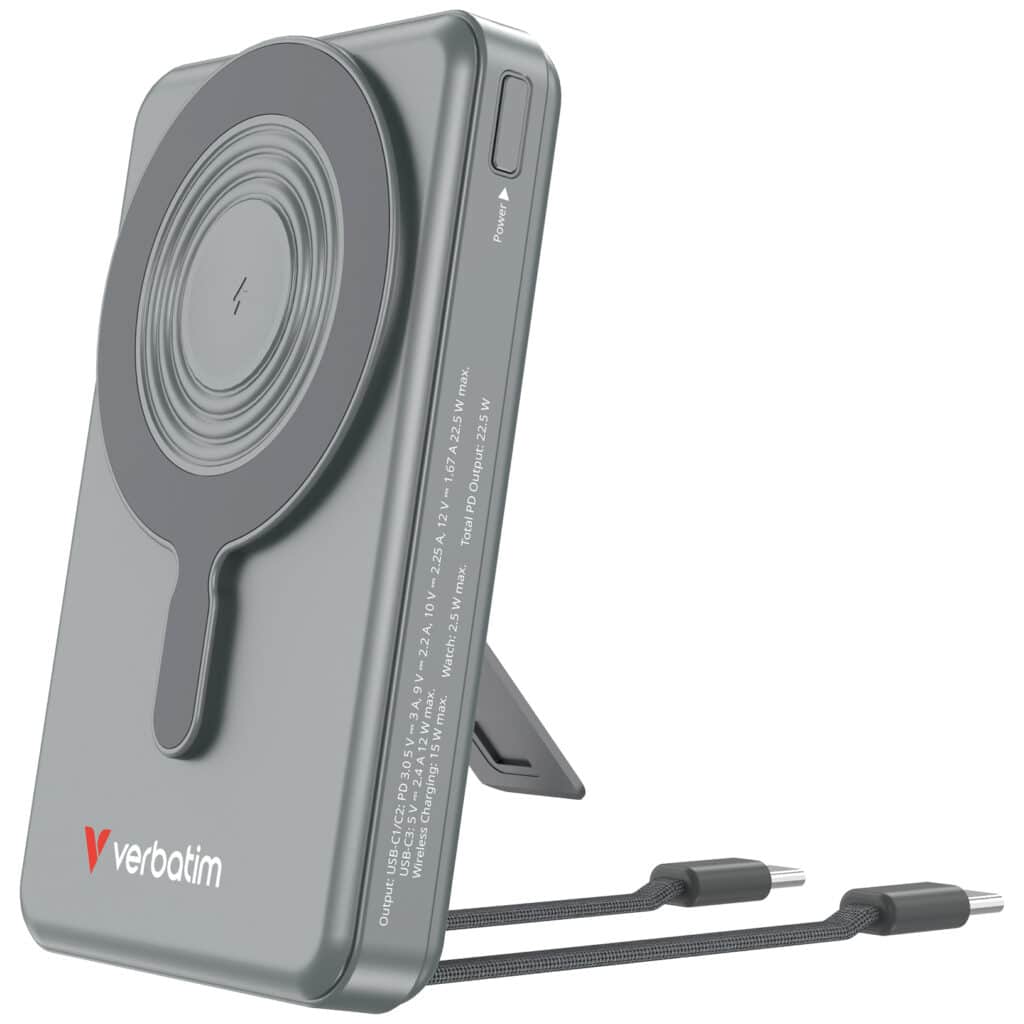
The Two Cable Power Bank with Display in our Charge’n’Go range charges wirelessly at up to 15W – MagSafe-compatible for iPhone, Qi2 for supported Android devices – with two built-in USB-C cables as backup and a display that shows remaining charge at a glance.
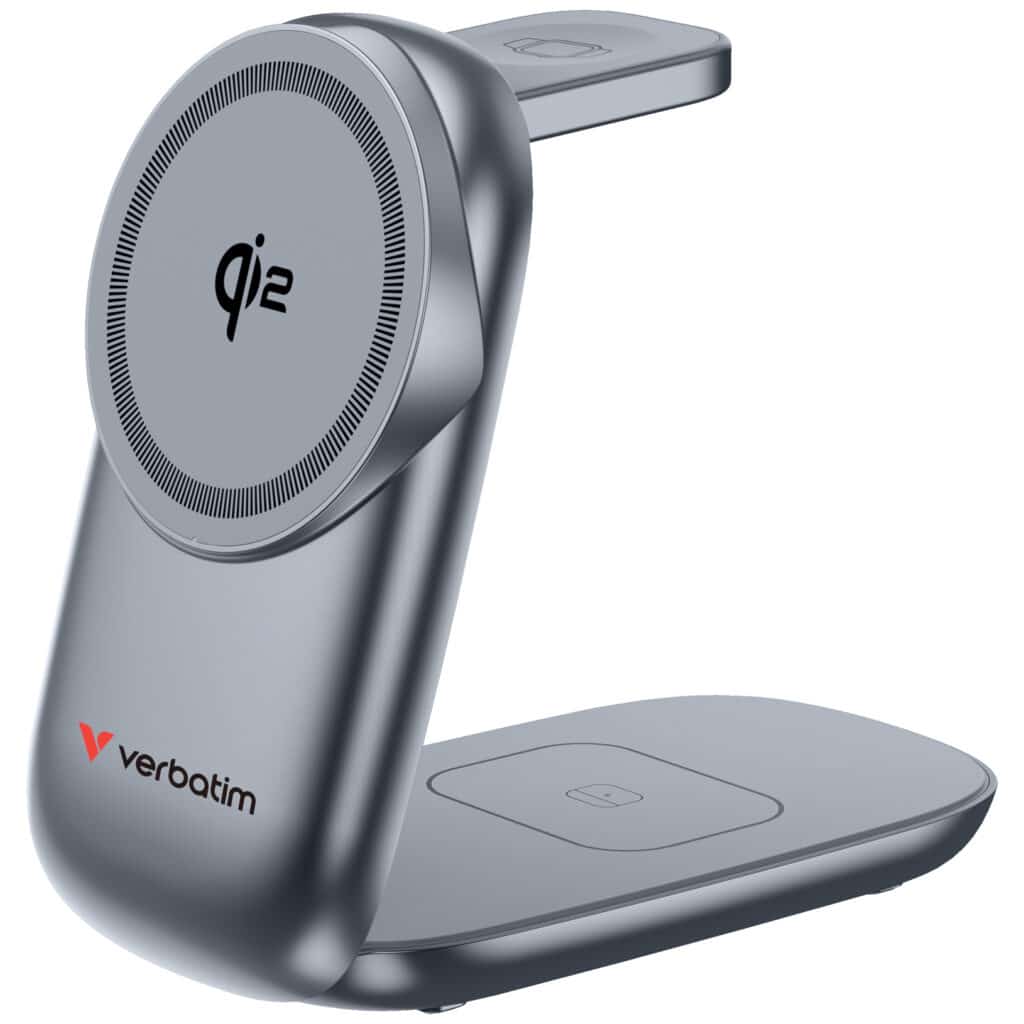
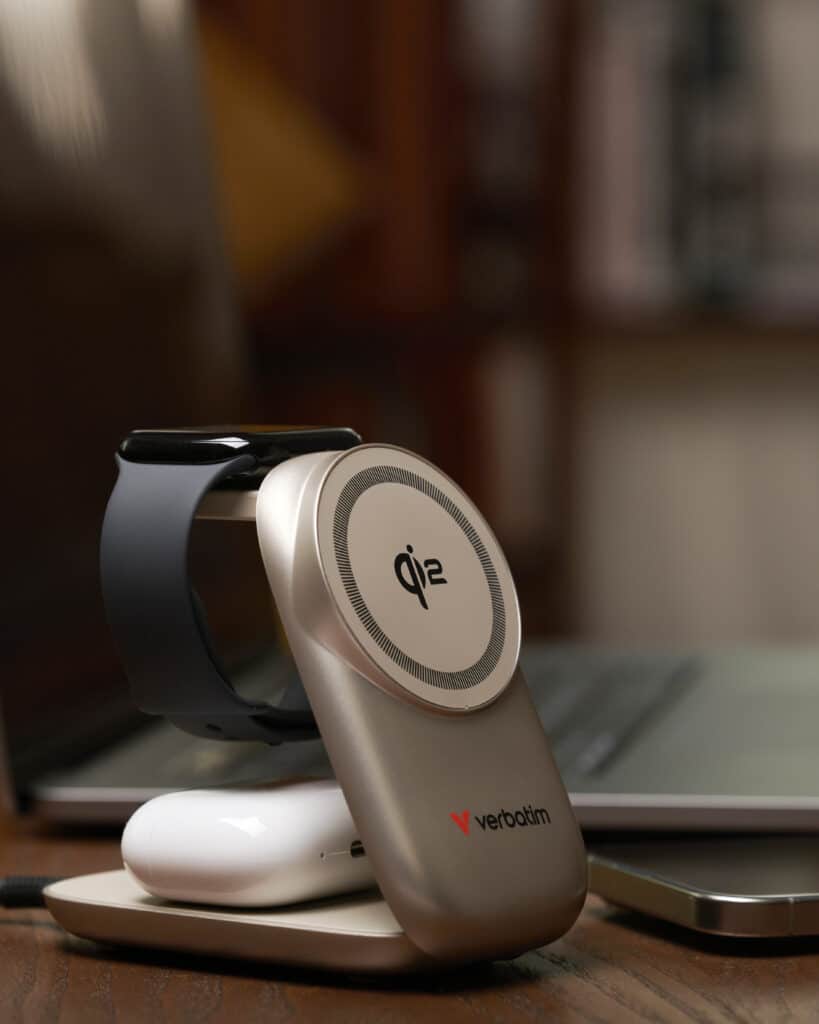
The 3-in-1 Qi2 Wireless Charging Dock, part of the wireless chargers range, folds flat for travel and handles phone, watch and earbuds charging from one dock.
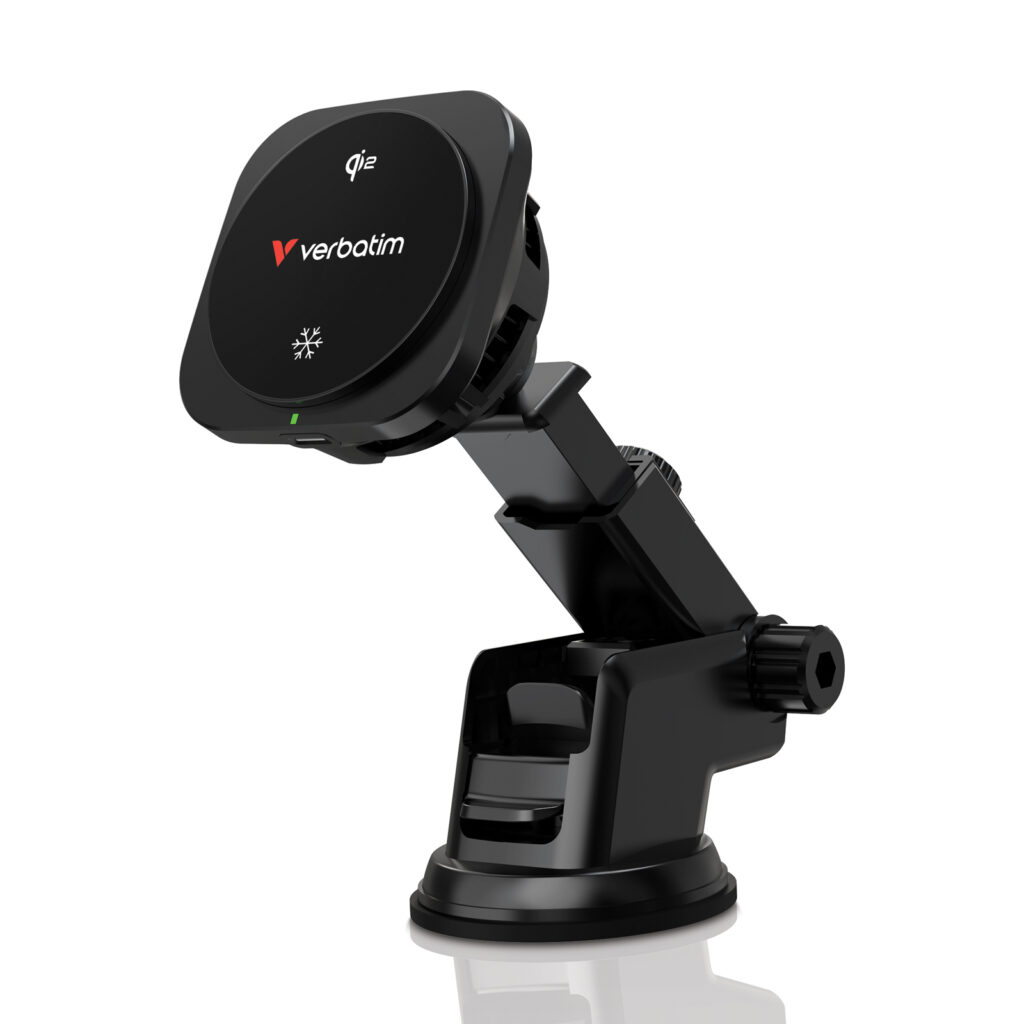
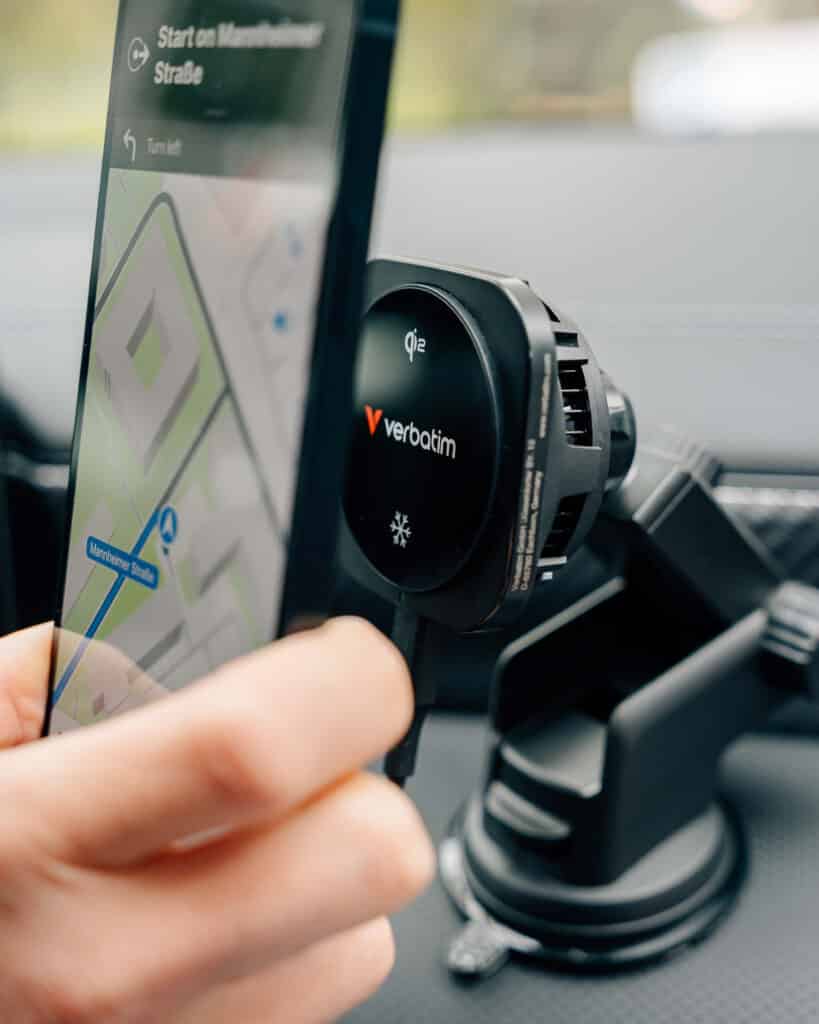
The Qi2 Charge ‘n’ Drive Magnetic Wireless Car Charger, in the car mounts and chargers range, brings the same magnetic snap-and-charge convenience to your commute, with active cooling to keep charging speeds stable on hot days.
One thing worth knowing if you’re using an Android phone: most of Verbatim’s magnetic power banks and magnetic charging accessories include an adhesive magnetic ring in the box, which attaches to the phone or phone case to give Android devices the same secure magnetic hold that’s built into MagSafe-compatible iPhones. Inclusions vary by product, so it’s worth checking the “what’s in the box” details on the product page before you buy if this is the reason you’re choosing a particular charger.
If you’re upgrading your charging setup, starting with a Qi2 device is the choice that keeps you covered whether your next phone is an iPhone or an Android.
Browse the full range: Wireless Chargers · Power Banks · Car Mounts & Chargers
Frequently Asked Questions
Not exactly. Qi2 is an open industry standard that incorporates the same magnet alignment system Apple built for MagSafe, but Qi2 is available to any phone or accessory maker, not just Apple. MagSafe only works with iPhone 12 and later.
Qi is the original wireless charging standard, using induction with no magnetic alignment and charging speeds that vary by device and brand. Qi2 is the newer version of that same standard, adding a built-in magnetic alignment ring and standardising fast charging at up to 15W across any certified phone and charger. Qi2 chargers remain backward compatible with older Qi-only phones, just without the magnetic snap or top speed.
Yes. iPhone 12 and later models are compatible with Qi2 chargers, including magnetic snap-on alignment and charging speeds up to 15W, in the same way they work with official MagSafe chargers.
No, MagSafe itself is exclusive to iPhone. However, a growing number of Android flagships are Qi2-certified, which gives them the same magnetic snap-on charging experience through the open Qi2 standard instead.
If your phone has built-in Qi2 or MagSafe magnets, no case is needed. If it doesn’t, you’ll need a magnetic case or a magnetic ring attached to your phone for the snap alignment to work – most of Verbatim’s magnetic power banks and chargers include an adhesive magnetic ring in the box for exactly this reason, though inclusions vary by product, so check the box contents on the product page first. Standard wireless charging will still work without one, just without the magnetic snap
They’re currently matched at up to 15W for supported devices, since Qi2 adopted the same power profile Apple used for MagSafe. The main advantage of Qi2 isn’t extra speed – it’s that more phones can now access that speed and magnetic alignment.
Yes. Qi2 and MagSafe-compatible phones will still charge on any standard Qi wireless charger – you just won’t get the magnetic alignment, and charging may default to a lower speed.