What Is PCR Plastic and Why Does It Matter in Tech?
Most of us interact with plastic tech accessories every day – a charger by the bed, a keyboard and mouse on the desk. We don’t often think about where that plastic came from. And increasingly, we’re not thinking about where it ends up, either.
That’s starting to change. Post-consumer recycled (PCR) plastic is becoming a meaningful part of how responsible manufacturers approach product design and it’s worth understanding what it actually means before you take any brand’s eco-claims at face value.

What is PCR plastic?
PCR stands for post-consumer recycled. It refers to plastic that has already been used in a consumer product – a bottle, packaging, or a piece of equipment – collected at end-of-life, and reprocessed into raw material that can be used to manufacture something new.
This is meaningfully different from ‘recycled content’ in a broader sense. Some products use pre-consumer recycled material – manufacturing offcuts and factory waste that never reached a customer. That’s useful, but it doesn’t address the larger problem: plastic that has already entered the consumer waste stream.
PCR plastic addresses that problem directly. It pulls material back from the waste stream – from kerbside recycling, take-back programmes, and collection initiatives – and gives it a functional second life.
In the case of Verbatim’s PCR Range, the recycled plastic used is flame-resistant polycarbonate – the same class of material used in conventional product housings. It meets the same safety certifications and performance requirements. The recycled origin doesn’t change what the material is capable of.
Why does it matter?
Consumer electronics generate an enormous volume of plastic waste. Chargers, cables, peripherals, and accessories are frequently replaced, rarely repaired, and often difficult to recycle at end-of-life. The plastic in those products typically comes from virgin petrochemical sources.
Using PCR plastic addresses this at two points in the chain simultaneously:
- It reduces the demand for virgin plastic production, which is an energy-intensive process that consumes fossil fuels and generates emissions.
- It diverts plastic from landfill and ocean waste, where it would otherwise persist for hundreds of years.
Neither benefit is transformative on its own, but across a product range of meaningful scale, the cumulative effect is significant. And when a manufacturer commits to PCR content across an product category rather than in a single flagship product, it signals a structural change in how they think about materials, not a one-off marketing exercise.

How Verbatim uses PCR plastic
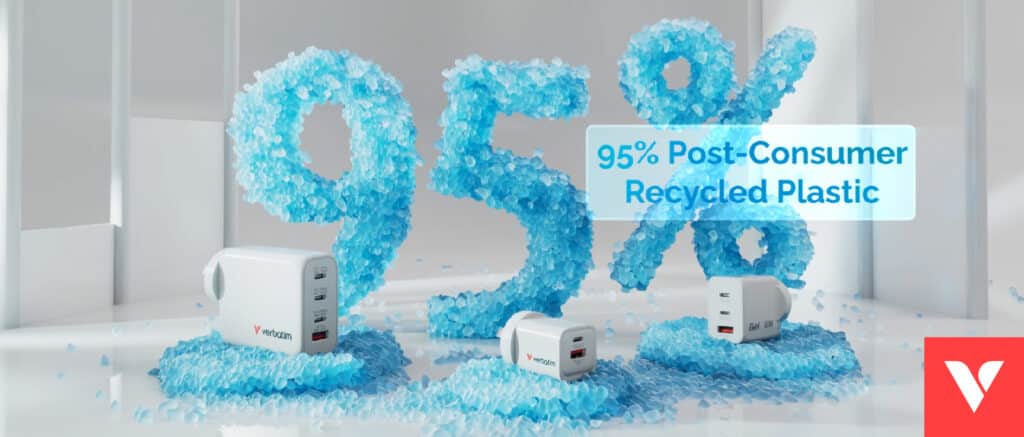
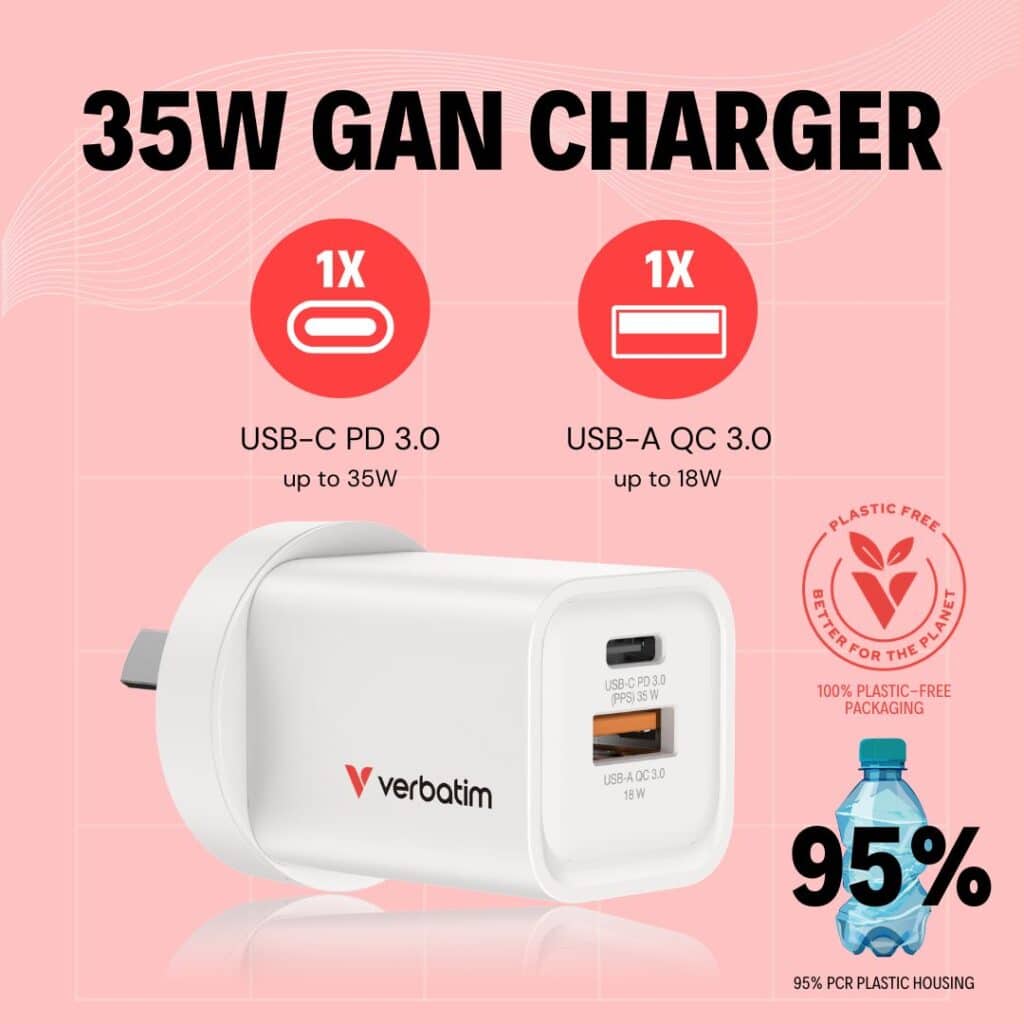
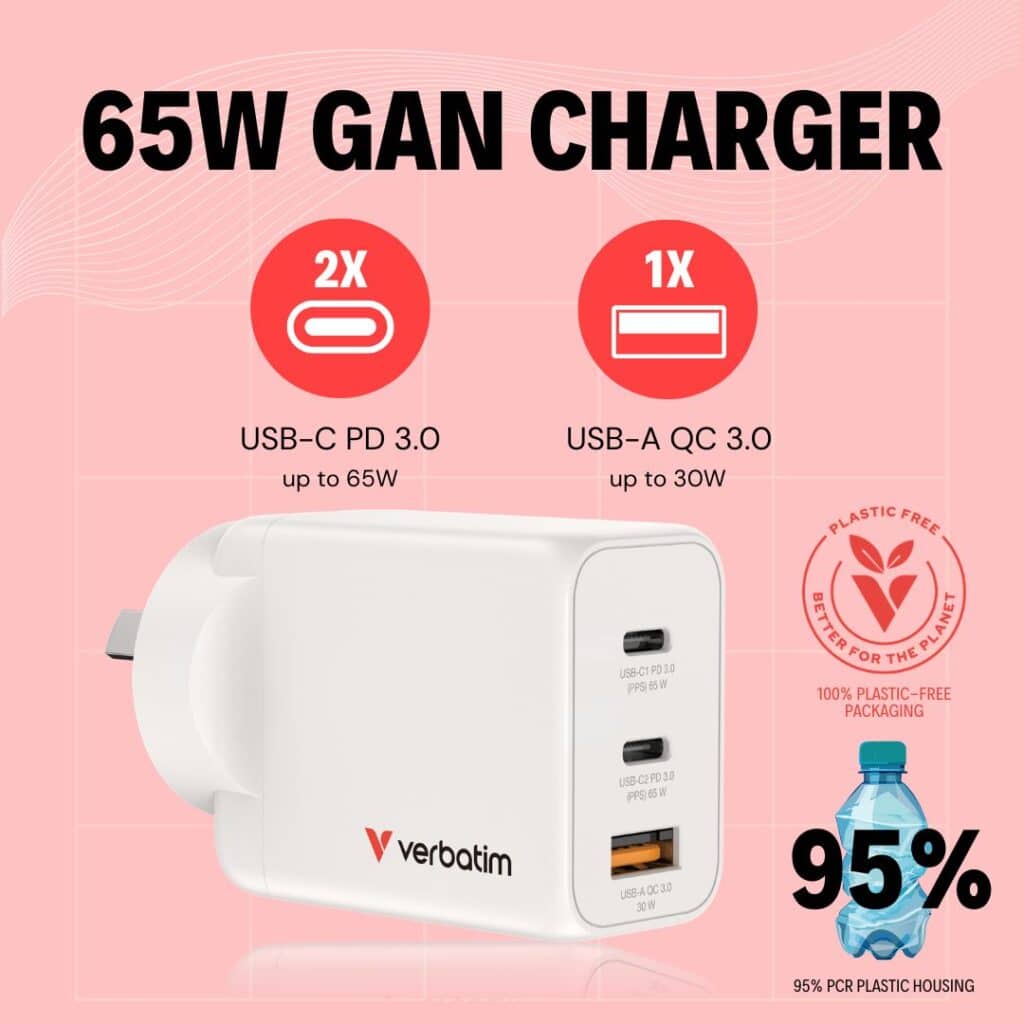
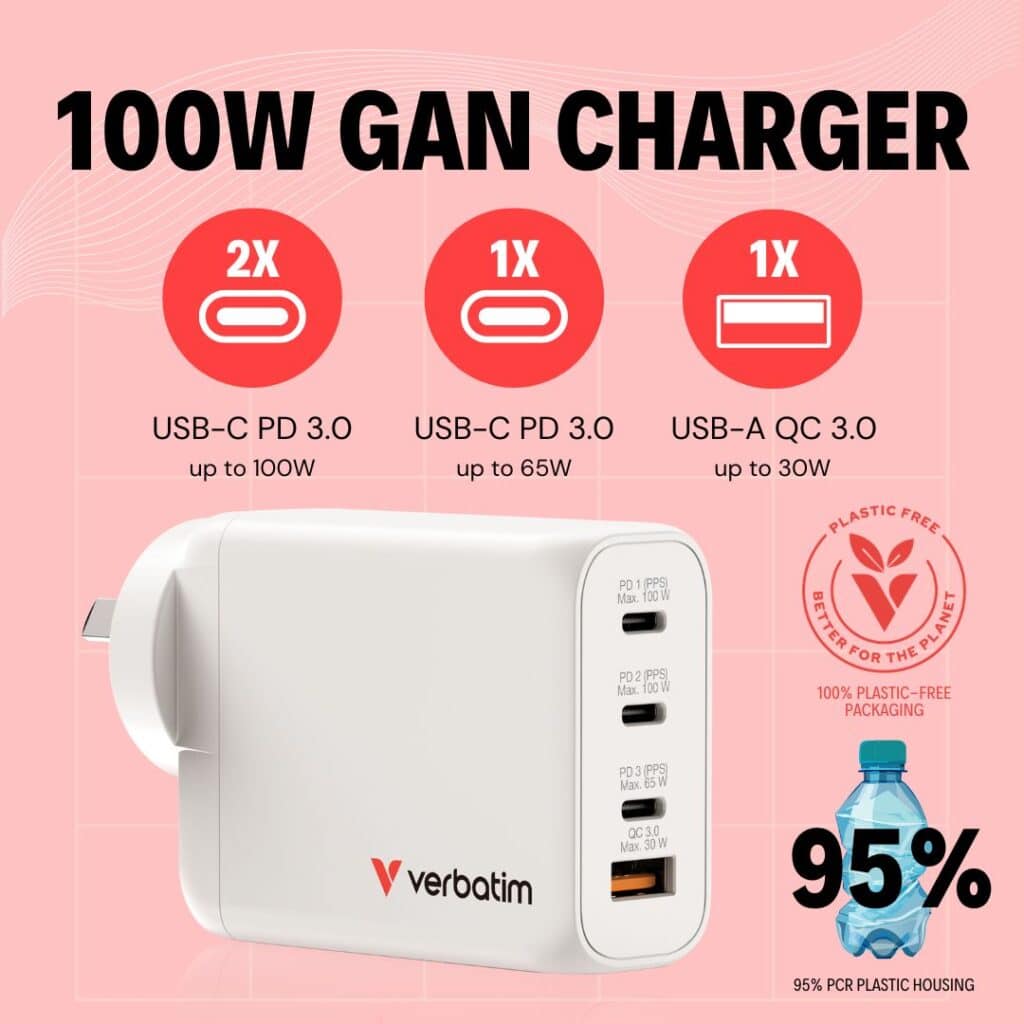
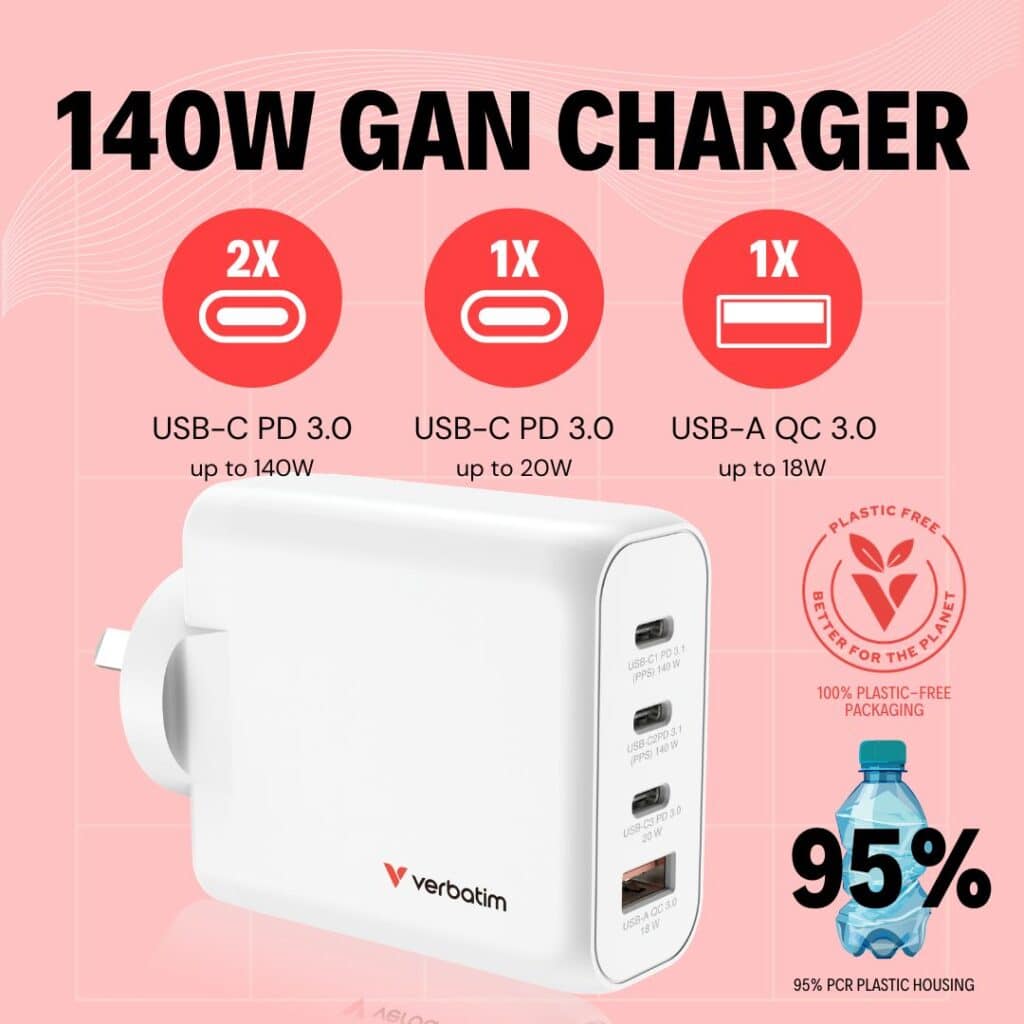
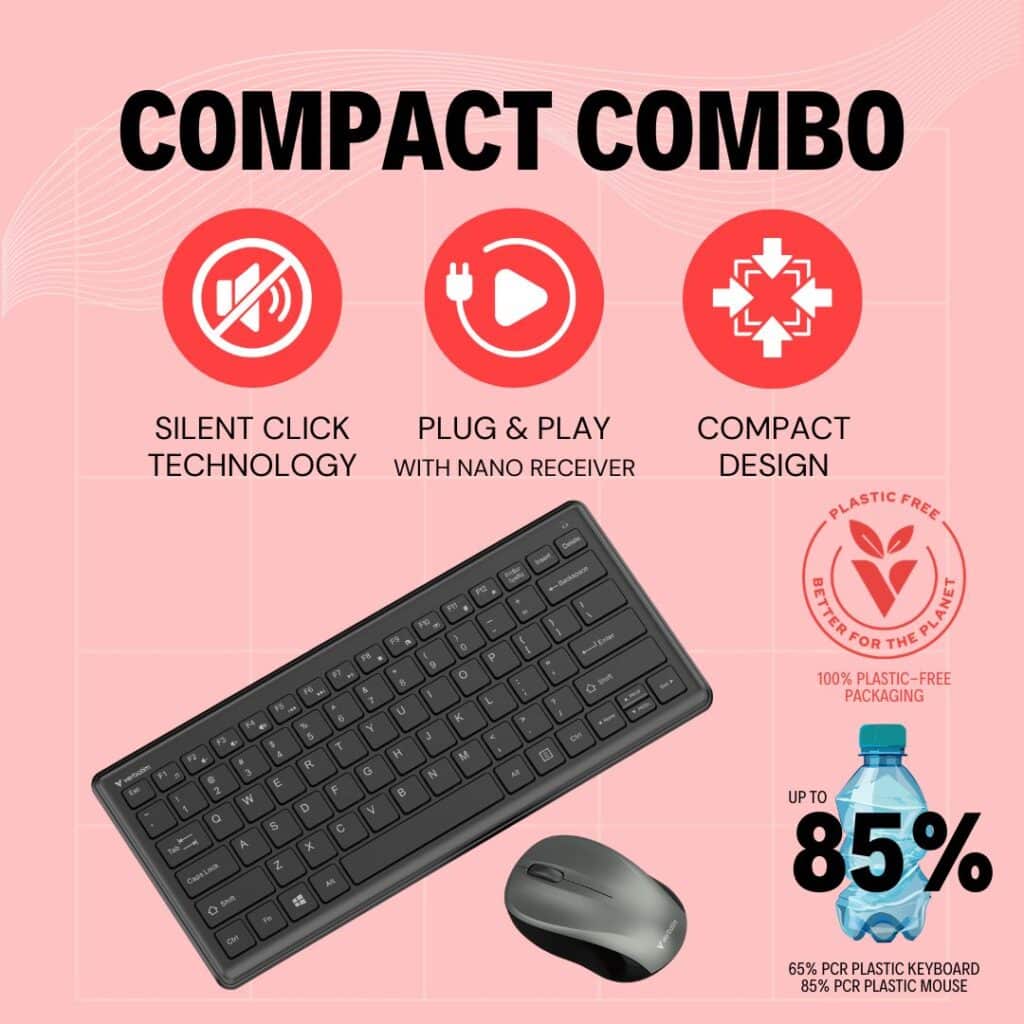
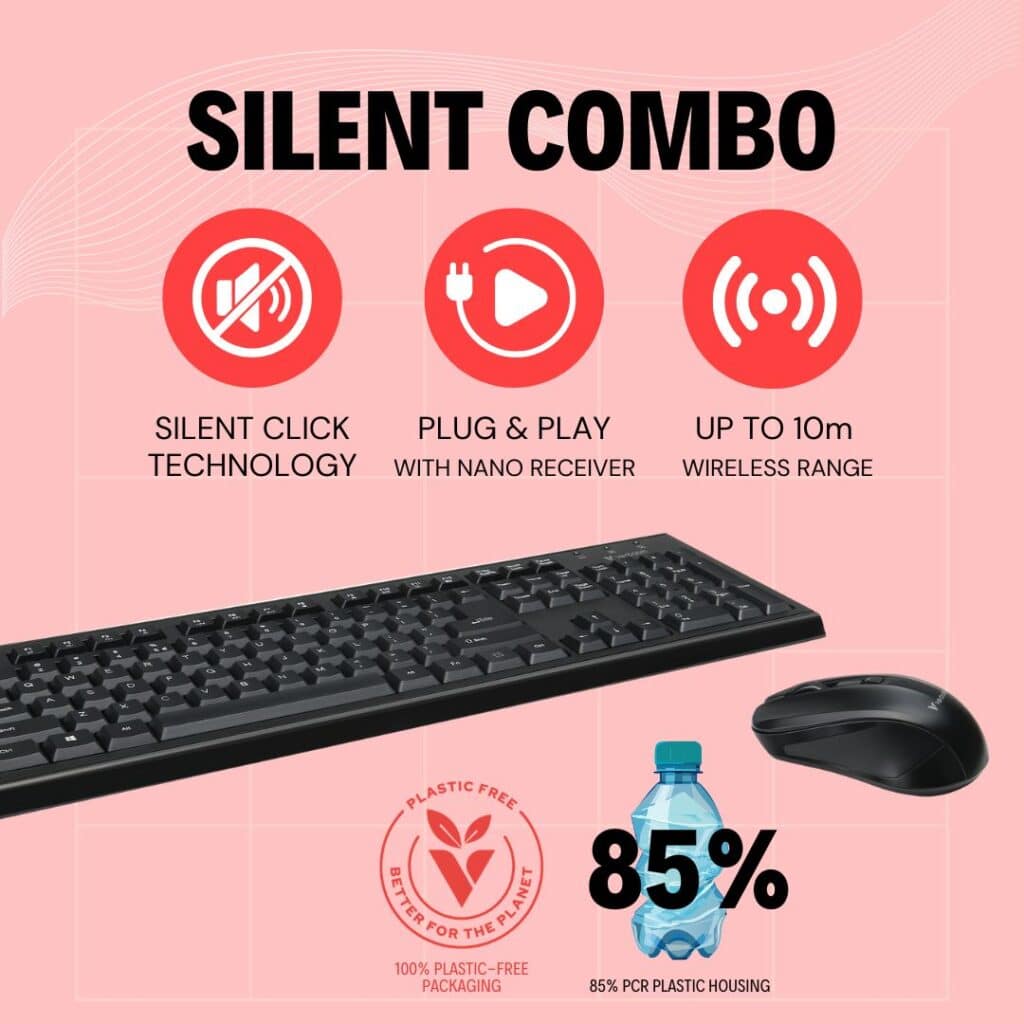
Verbatim’s PCR Range currently includes six products across two categories: GaN wall chargers and wireless keyboard and mouse combos. The housings across the range are made with 65–95% PCR plastic, depending on the product.
The GaN charger range also ships in 100% plastic-free, FSC-certified paper packaging — removing plastic from the product experience entirely, from shelf to setup.
And the range is growing… Verbatim is actively expanding its PCR offering across more product categories, so whether you’re outfitting a home office, refreshing a corporate fleet, or building a more sustainable procurement catalogue, there will be more options to choose from as the programme matures.
What does a 2-year warranty tell you about PCR plastic?
Every product in the Verbatim PCR Range carries a 2-year limited warranty — the same as conventional Verbatim products. This isn’t incidental. It’s a signal that PCR plastic performs to the same standard as virgin material in real-world conditions. If it didn’t, the warranty wouldn’t make commercial sense.

What to look for when buying eco-conscious tech
The consumer electronics space has a greenwashing problem. ‘Eco-friendly’, ‘sustainable’, and ‘green’ appear on packaging with little accountability. Here’s a more useful checklist for evaluating claims:
- Look for numbers: Specific PCR percentages, not vague claims.
- Check both: Packaging sustainability alongside the product itself.
- For packaging: Certified paper (FSC) or unbleached materials are easy things to look for.
- Warranty length: A credible warranty is a proxy for build quality and material performance.
- Consider the technology, not just the material: GaN technology is meaningfully more efficient than traditional silicon chargers – up to 40% smaller, generating less heat, and typically extending device lifespan by running cooler. Efficiency has sustainability value.
None of these factors are a guarantee of sustainability in the broadest sense. But they are concrete, verifiable signals and they’re much harder to fake than a leaf logo on a box.
The short version
PCR plastic isn’t a silver bullet. But it’s a real, meaningful change to how a product is made – one that reduces waste, reduces virgin material demand, and doesn’t ask you to compromise on performance to achieve it.
Performance and sustainability aren’t trade-offs. They just require manufacturers willing to close the gap.
Verbatim’s PCR Range was built on exactly that premise. And with more products in development across additional categories, it’s a commitment that goes beyond a single product launch.